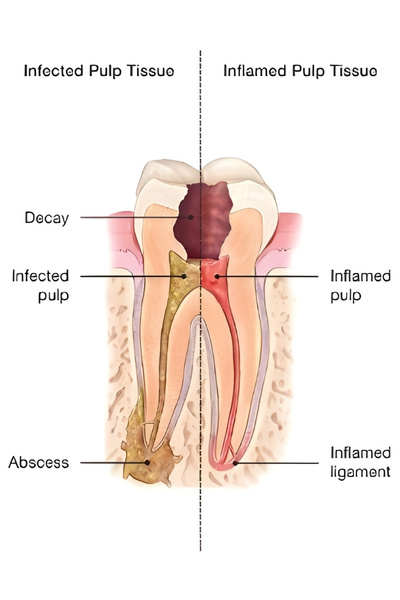
A root canal treatment is a dental procedure to remove inflamed or infected pulp on the inside of the tooth which is then carefully cleaned and disinfected, then filled and sealed. Root canal treatment is designed to eliminate bacteria from the infected root canal, prevent reinfection of the tooth and save the natural tooth.
What happens during root canal treatment?
There’s no need to be worried if your dentist or endodontist prescribes a root canal procedure to treat a damaged or diseased tooth. Millions of teeth are treated and saved this way each year, relieving pain and making teeth healthy again.
Inside your tooth, beneath the white enamel and a hard layer called dentin, is a soft tissue called pulp. This tissue contains blood vessels, nerves and connective tissue, which help grow the root of your tooth during its development. A fully developed tooth can survive without the pulp because the tooth continues to be nourished by the tissues surrounding it.
A modern root canal treatment is nothing like those old sayings! It’s very similar to a routine filling and can usually be completed in one or two appointments, depending on the condition of your tooth and your personal circumstances. Getting a root canal is relatively painless and extremely effective. You’ll be back to smiling, biting and chewing with ease in no time.
Root canal benefits
Saving the natural tooth with root canal treatment has many advantages:
Efficient chewing
Normal biting force and sensation
Natural appearance
Protects other teeth from excessive wear or strain
To achieve these benefits, your tooth will be evaluated by one of our board-certified endodontist, who will explain your findings and the best treatment options for your situation.
Most patients are comfortable during a root canal with modern anesthesia. Mild soreness afterward is common for a few days and is usually managed with over-the-counter medicine—call your endodontist if pain is severe or lasts longer than a few days.
Can all teeth be treated endodontically?
In many cases, yes—most teeth can be treated and saved. A tooth may not be a good candidate if the canals can’t be reached, the root is badly fractured, there isn’t enough bone support, or the tooth can’t be properly restored; when standard root canal treatment isn’t enough, endodontic surgery may still help in some situations.
What not to do after a root canal?
Avoid hard, crunchy, or very chewy foods, and don’t put much pressure on the treated tooth while it’s healing. Keep brushing and flossing, but be gentle around the area and follow your endodontist’s instructions.
Serving Bedford, NH & nearby communities
We’re proud to care for patients in Bedford and surrounding communities in southern New Hampshire
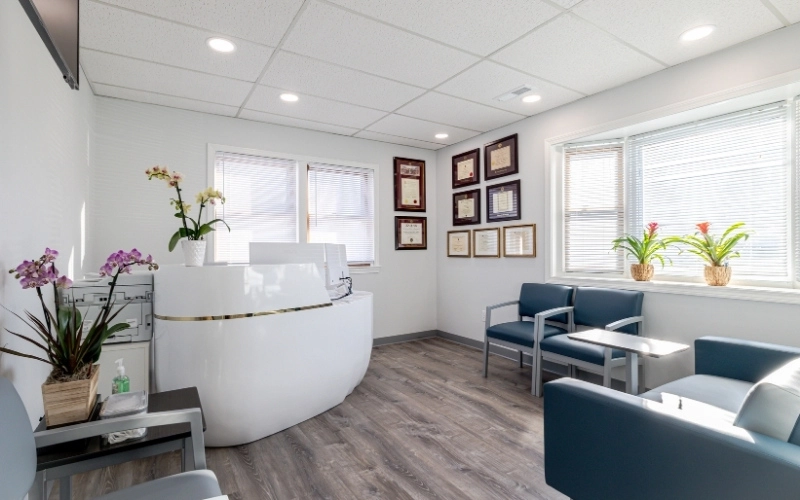
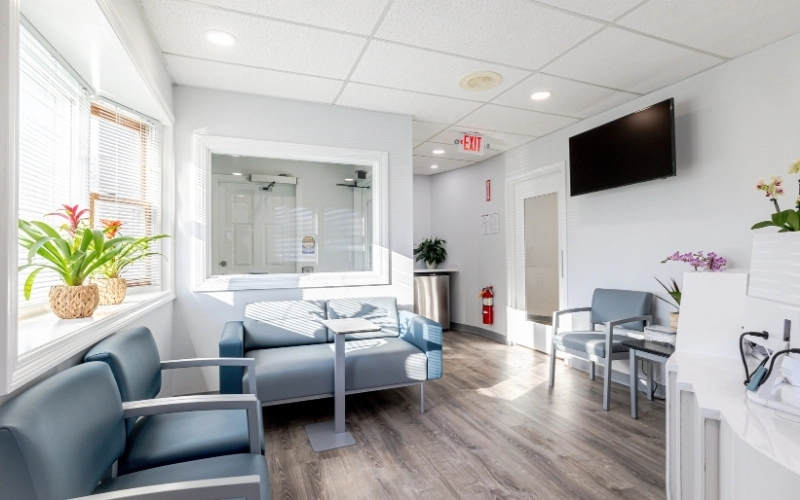
We are located in Bedford, New Hampshire. Visit us at 206 Riverway Place, just off Route 3. You’ll find us in a professional office setting with plenty of free parking available.
206 Riverway Place, Building 2 Bedford, NH. 03110
Monday - Friday: 9 AM - 6 PM Saturday: appointment only